Early UX in Hardware & Software
Getting in the room before decisions are made: how early UX involvement shaped a new business model and a next-generation warehouse station.
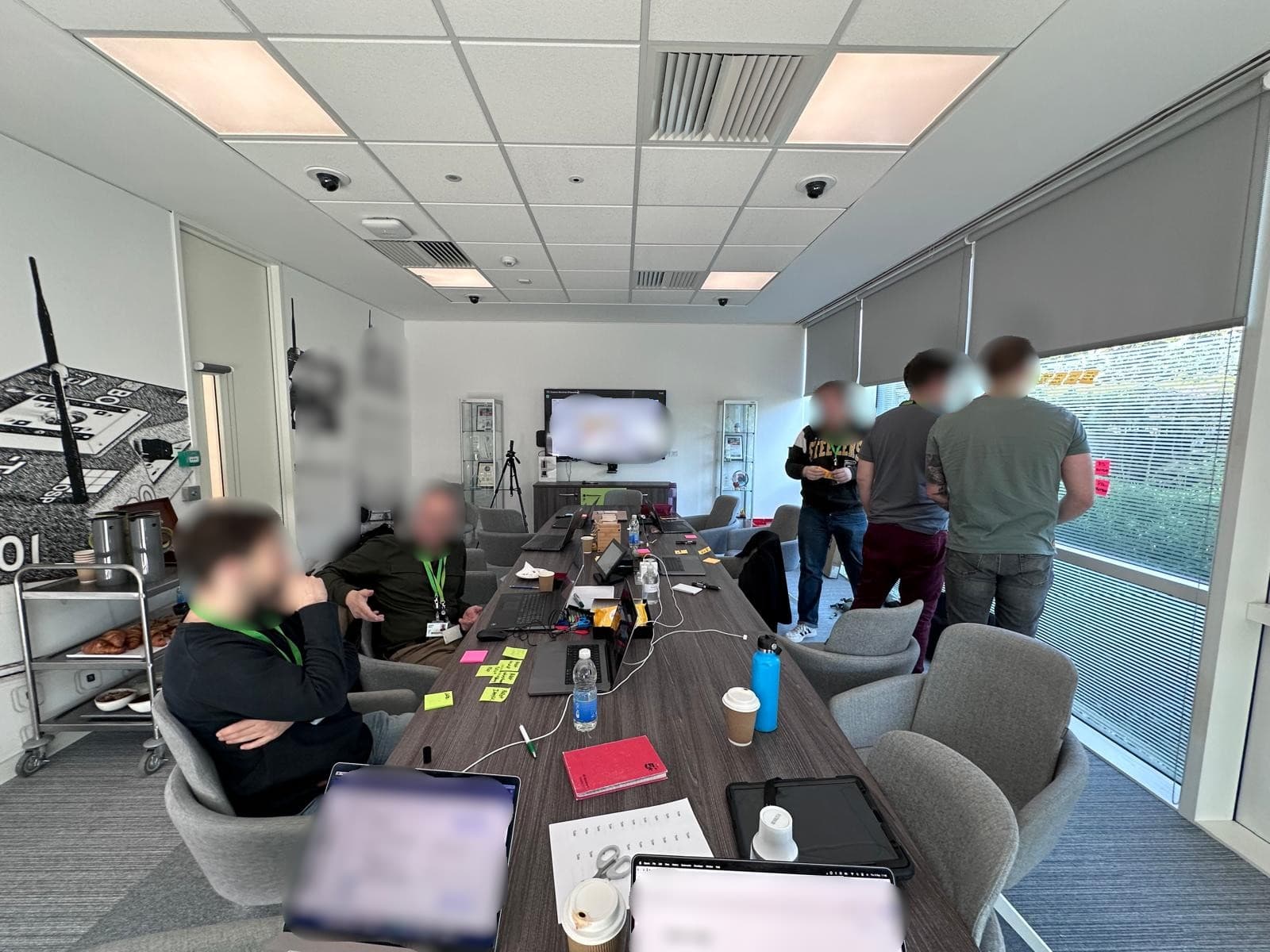
Most UX work happens after the direction is set. These two projects are different. In the shared pallet workflow project, I ran live site trials before any engineering work had started, surfacing critical gaps the product team hadn't considered. In the station design workshop, I co-led a full day of cross-disciplinary ideation and physical prototyping that gave hardware engineers a clearer picture of what they were actually designing for. Both share the same logic: the earlier UX gets involved, the cheaper problems are to fix.
Project 1 — Shared Pallet Workflow
- Role
- Lead UX representative for the decant and mobile workflow
- Worked with
- UX lead, UX manager, UX researcher, product managers and the warehouse management team
- Duration
- 3 months
The context
A new business model needed a new workflow. Nobody had fully mapped what that meant physically.
Traditionally, suppliers shipped directly to each individual warehouse site. The new model changed that: everything goes to one large parent site first, then distributes internally to smaller child sites, bringing significant cost savings on supplier logistics.
It ran as a proof of concept, with the goal of proving the model worked well enough to sell as a service that could save clients millions. The workflow meant adapting existing mobile apps and dashboards to a completely new physical and logistical process: real workers, real pallets, real constraints that nobody had fully mapped yet.
I was brought in before any engineering work had started. That timing made all the difference.
The Live Site Trials
Because UX was involved early enough, we uncovered issues nobody knew about until we went to the site.
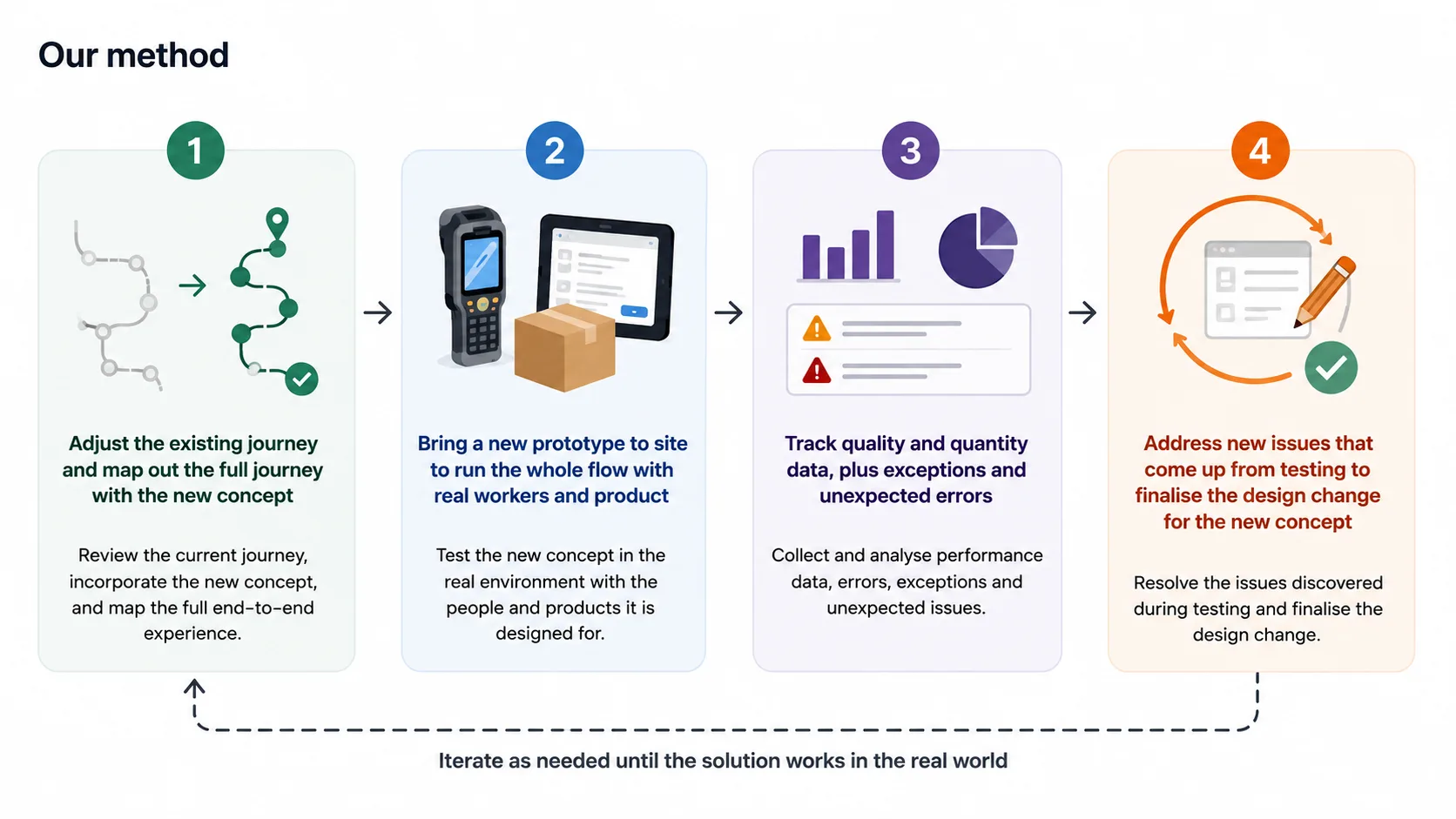
The UX team mapped out the full journey together before heading out. I owned the inbound mobile and station flow, roughly half the overall workflow, while the other UX designer owned the inbound dashboard flow. We brought paper prototypes, software prototypes, and a plan to capture both timing data and qualitative feedback.
We contacted the site ahead of time to get pallet truck drivers, area managers, and whoever would run this workflow every day involved in the flow testing. They physically moved pallets, followed the proposed flow, and told us what worked and what didn't.
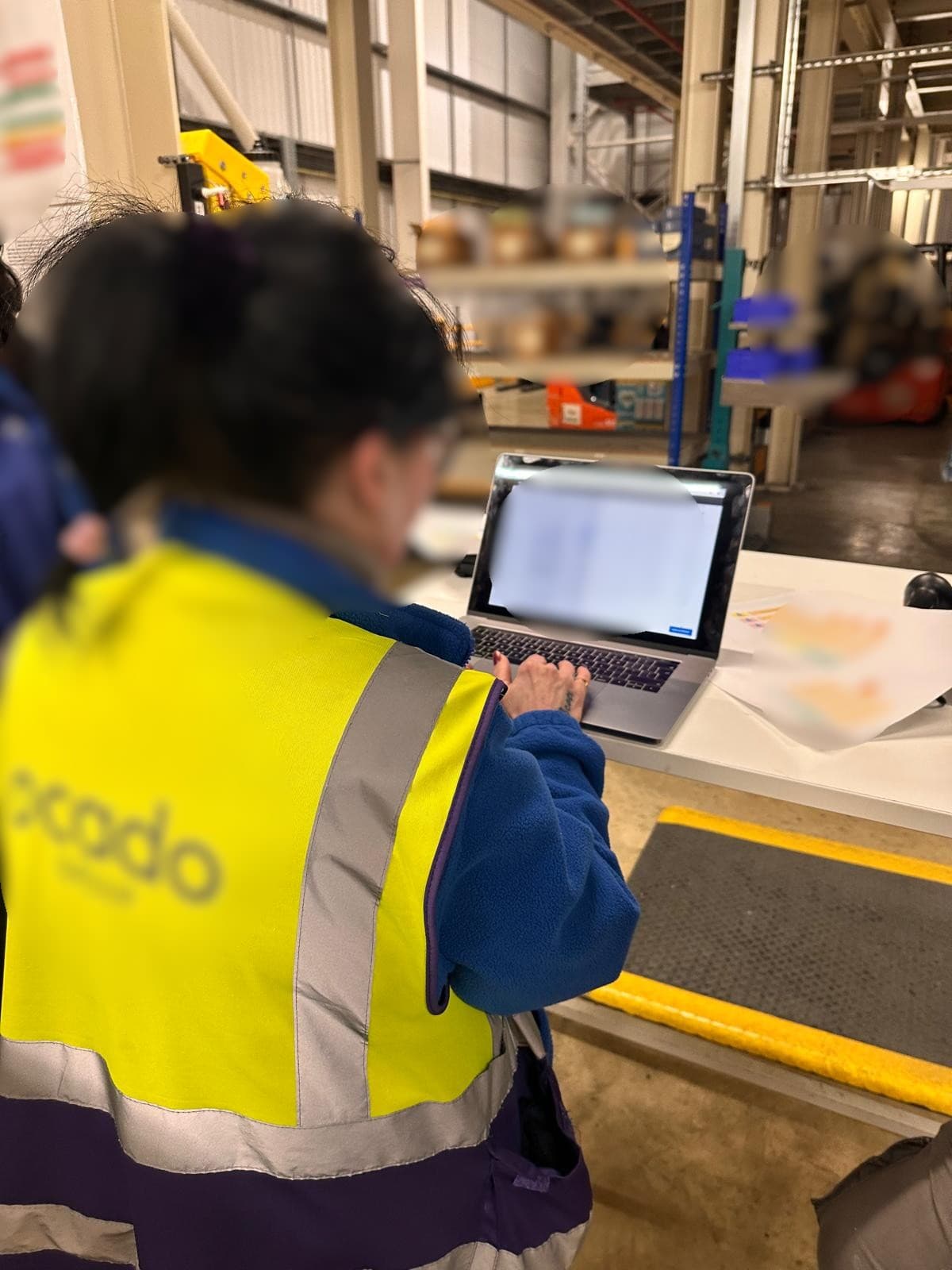
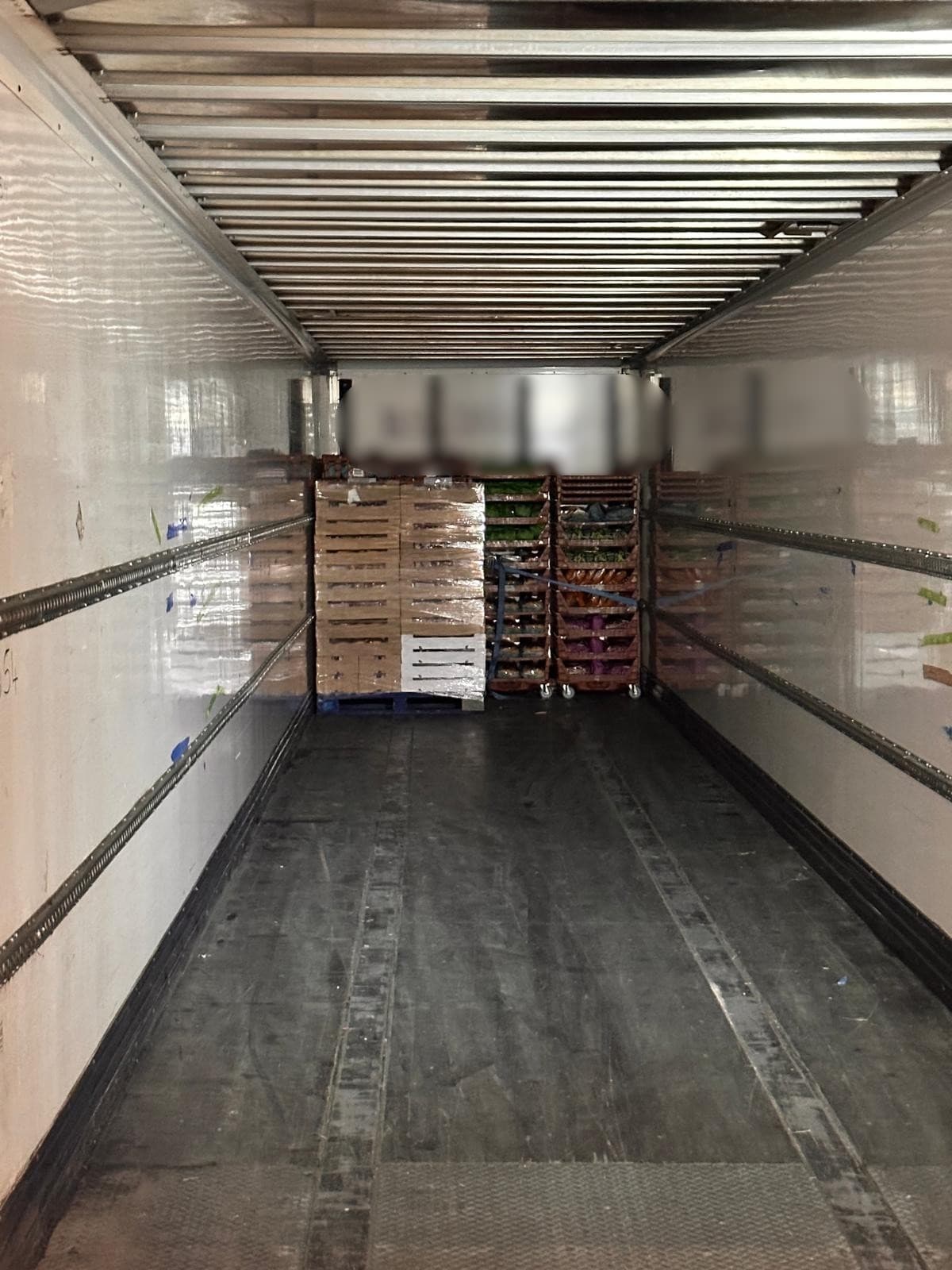
The trials revealed issues we couldn't have found in any design review or stakeholder workshop
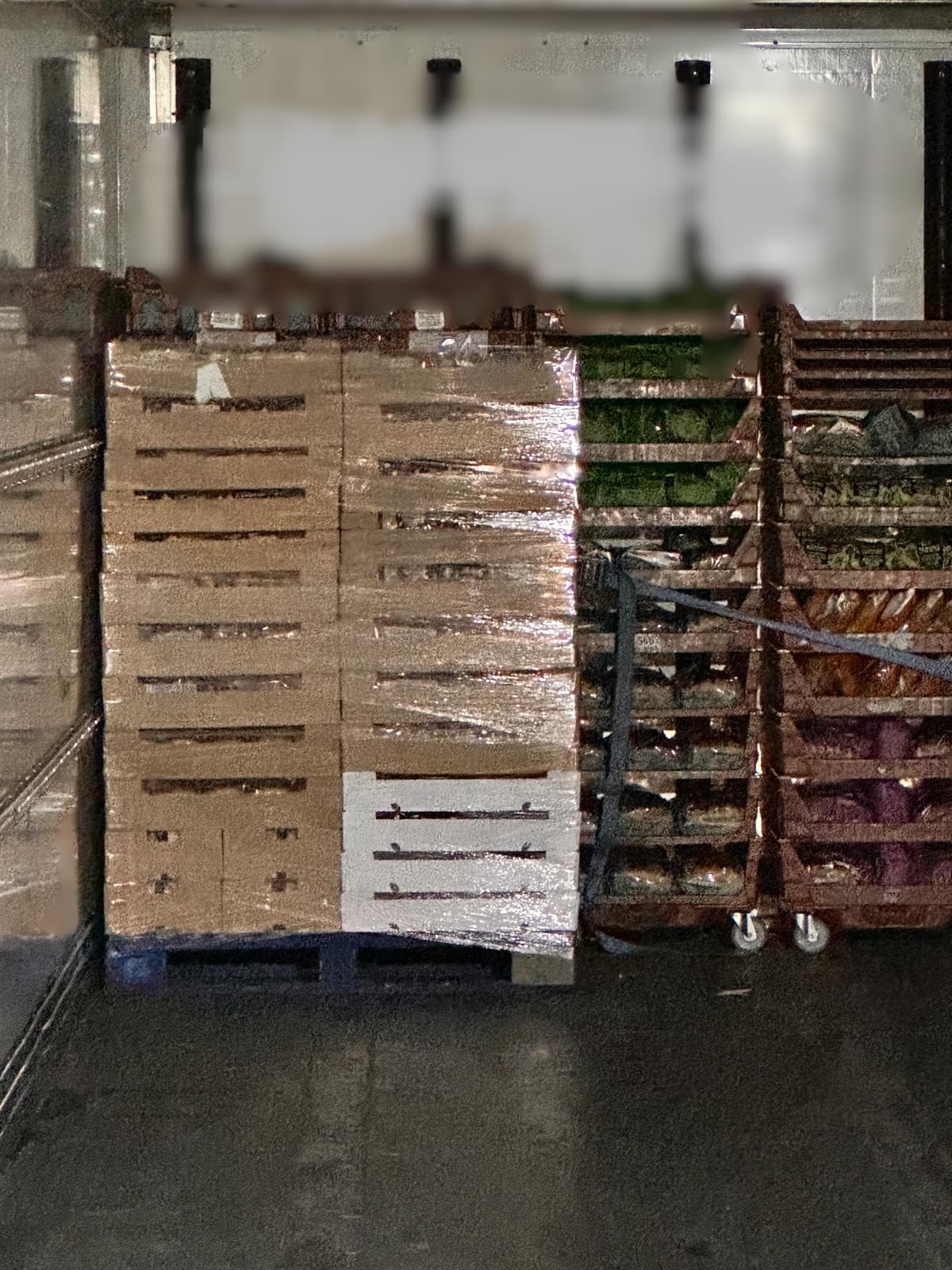
Stacked pallet height.
Suppliers were sending pallets stacked and plastic-wrapped, and the combined height exceeded the ceiling clearance of the holding area — a new area added for the workflow that they wouldn't normally need to drive a pallet into. The team had to rethink the layout or introduce a de-stacking step.
Physical barcode design.
The barcode everyone assumed would work had real flaws that only appeared when operatives physically handled it. Their feedback directly shaped a redesign.
Pallet tag recycling.
Tags needed to travel between parent and child sites, but there was no process for getting them back. This led to a full tag redesign and a formal recycling process between sites.
Pallet orientation on truck loading.
Barcodes needed to face a specific direction at loading so drivers at child sites could instantly identify their pallets. A small physical detail that saved real time at scale, across every delivery.
The Outcomes
Expensive surprises before deployment beat expensive surprises after it. The product manager took the findings and worked through the implications: communicating pallet standards to suppliers, planning holding area layout, calculating pallet moving time to assess cost and feasibility. The MVP scope expanded as a result — deliberately, rather than as a surprise mid-development.
The workers who participated responded positively to being involved. Contributing to a workflow that would shape their daily work doubled as informal onboarding, giving them early familiarity before deployment.
The live site testing wasn't just research. It was relationship building and change management at the same time.
The Same Principle, a Different Medium
In the first project, early UX involvement shaped a software workflow before it was built. In the second, the design challenge wasn't digital: it was physical. Instead of apps and dashboards — a warehouse station workers stand at, reach into, and interact with dozens of times per shift. Instead of software engineers — hardware engineers and an ergonomics specialist. Instead of screen prototypes — tables, totes, and products from the warehouse floor.
The approach was identical: get the right people in the room before decisions are locked.
Project 2 — Next-Generation Station
- Role
- Co-lead UX
- Worked with
- UX researcher — co-planned and co-hosted the workshop
- Workshop participants
- Hardware engineers, software engineers, hardware engineering manager, principal product manager, product managers, staff engineers, and health & safety analyst
- Duration
- Full-day workshop, followed by additional follow-up work
The context
One physical station, three workflows.
Warehouse stations currently handle one workflow each — decant, pick, or inventory management — each with its own hardware setup. The company was exploring a next-generation station combining all three in a single unit, which meant rethinking the software and the physical hardware: the station's shape, its ergonomics, and how conveyors would reconfigure for different tasks.
This was early-stage exploration, with no right answer to hand over. The goal was to open up the possibility space before individual teams made siloed decisions. I co-led the workshop with a UX researcher; in the room were hardware engineers, product managers, and a principal analyst specialising in ergonomics.
The Workshop
From video analysis to a life-size prototype, in a single day.
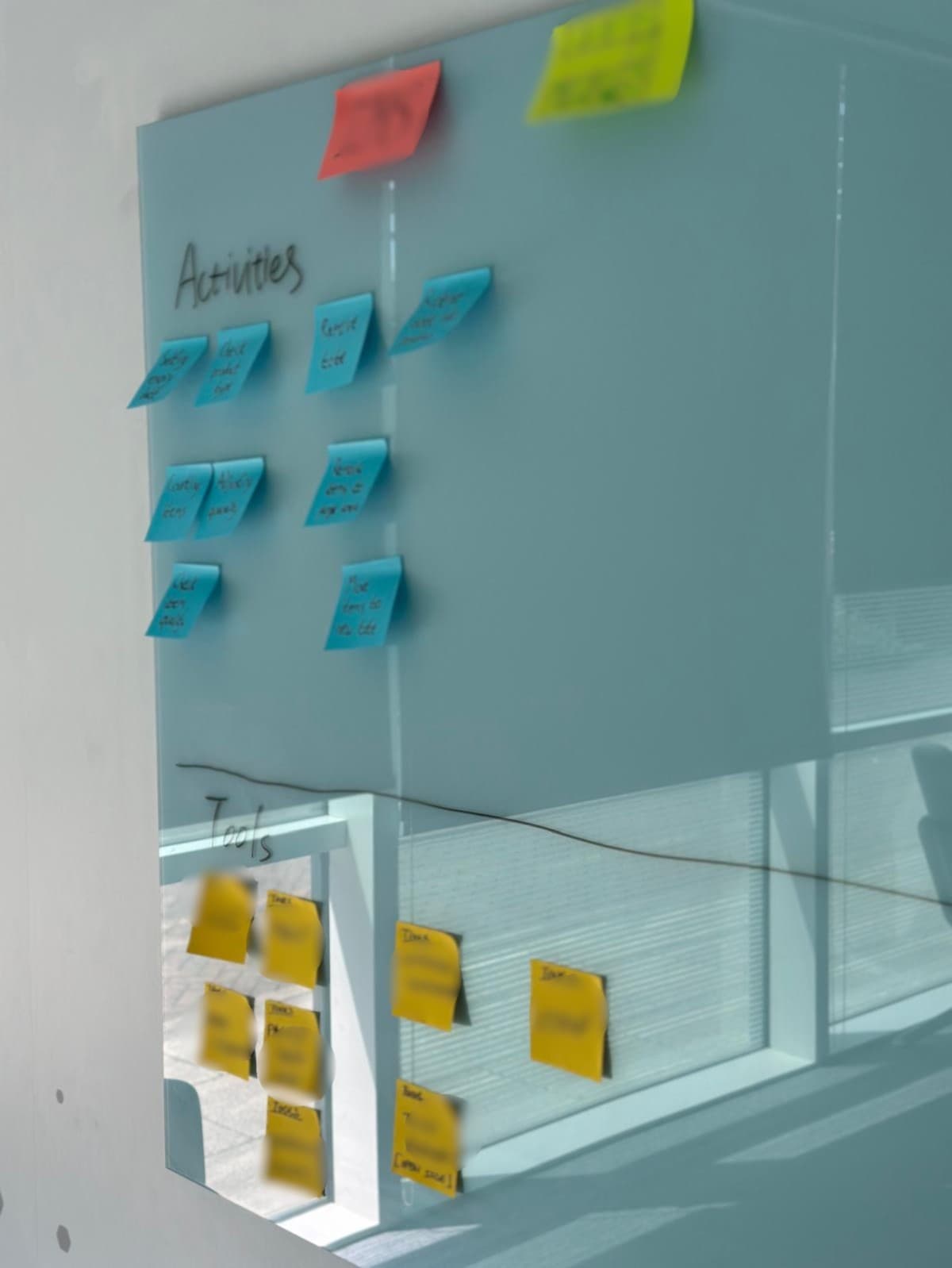
Video analysis and journey mapping.
We watched footage of workers using the current stations, and every team member mapped the user journey per workflow: what the worker does, how they interact physically, and where the pain points are. A shared, grounded picture of what the station needed to support.
Sketching and small prototypes.
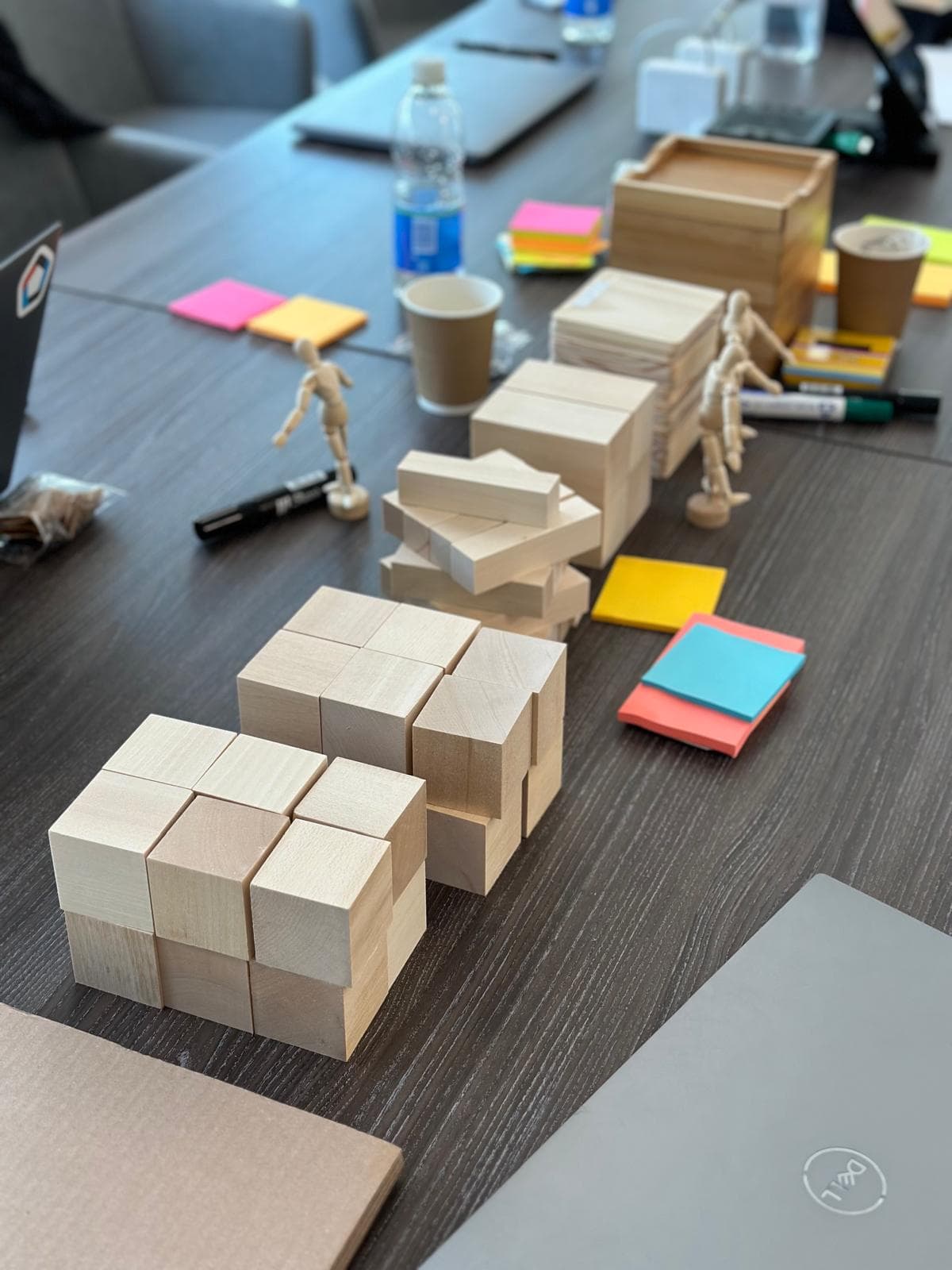
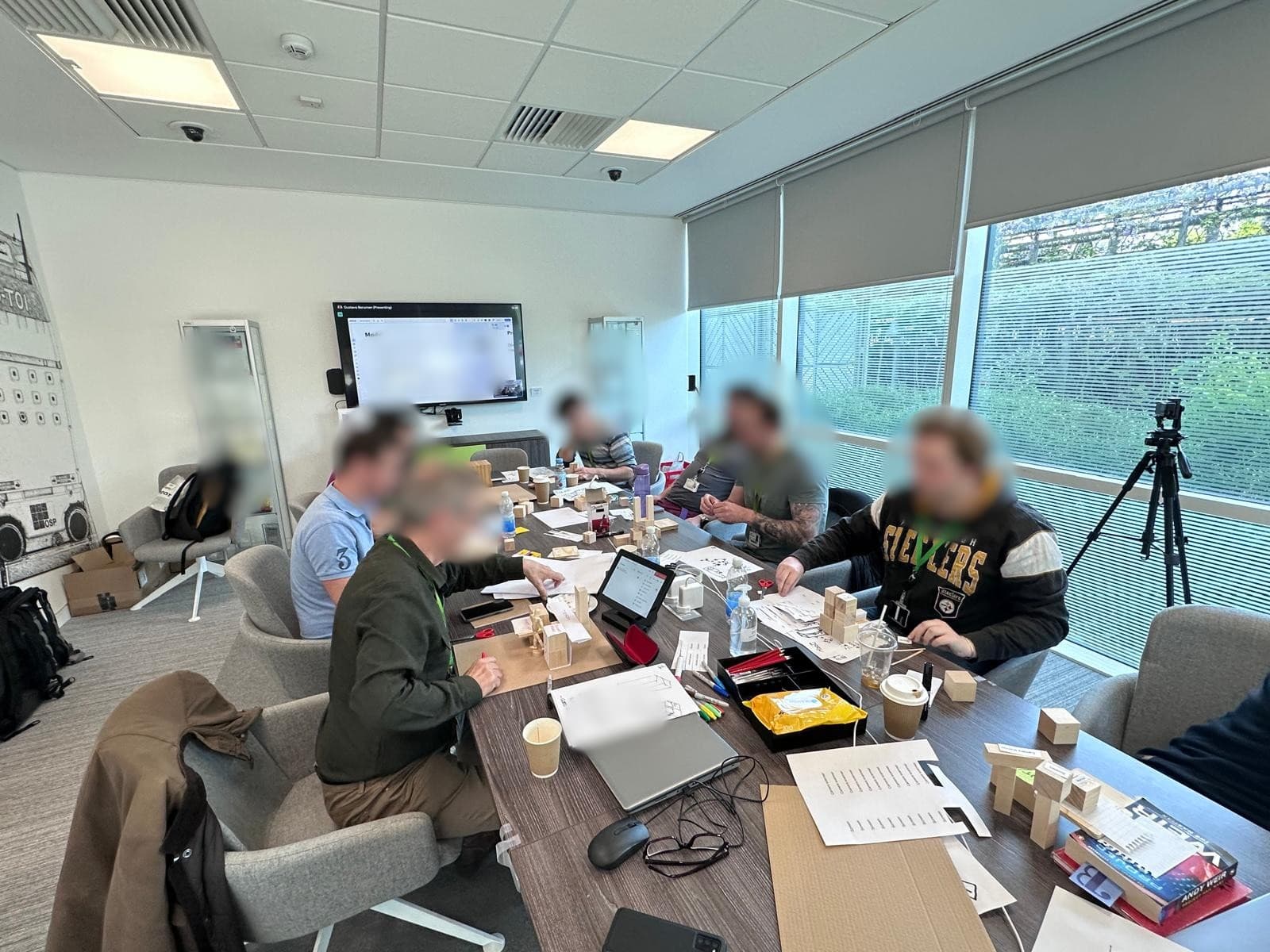
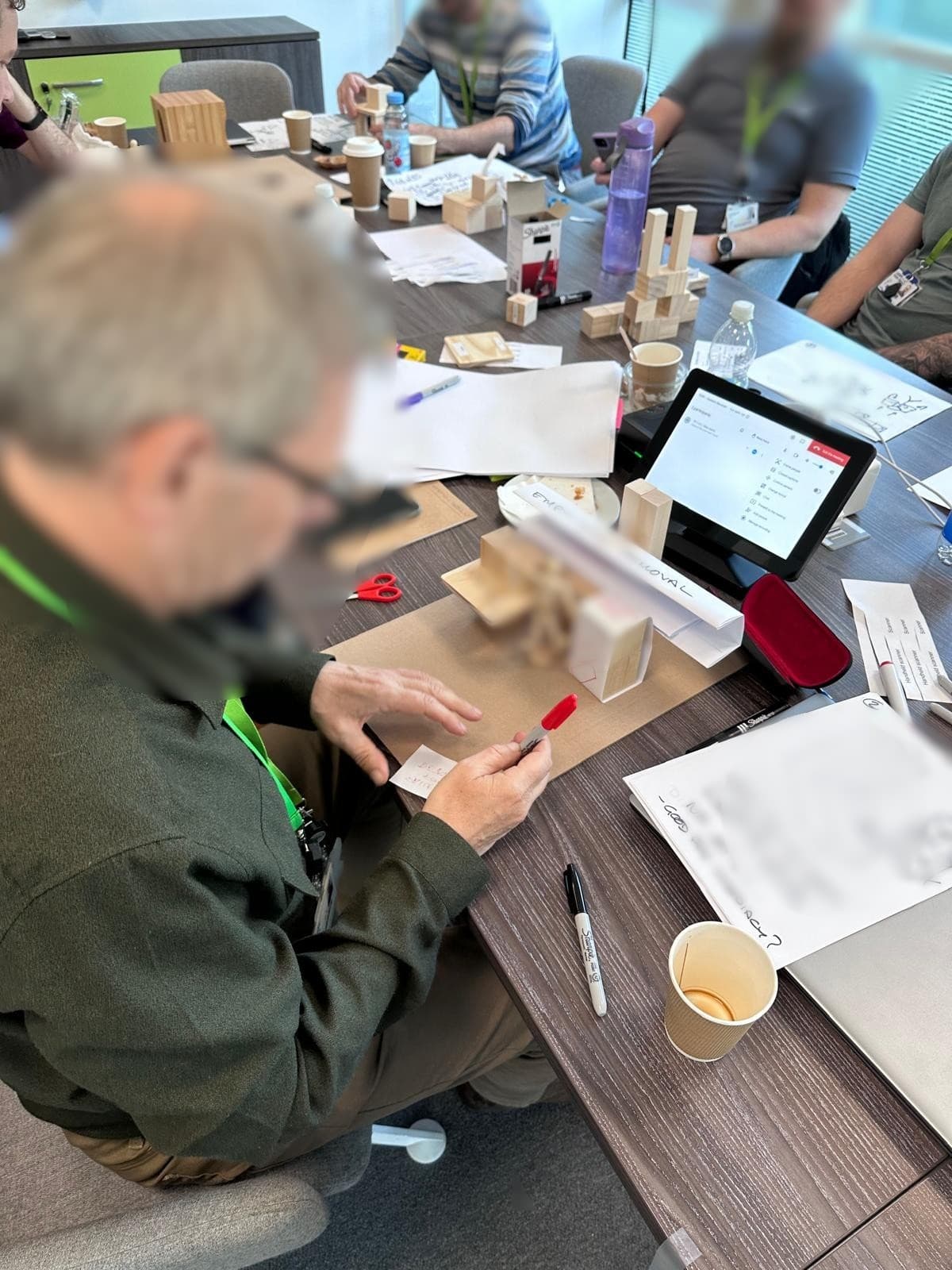
Teams sketched individually and in groups, presented, then built small physical prototypes. Even rough 3D concepts immediately surfaced questions drawings couldn't: how does a worker reach this? What happens to the tote here? Where does the conveyor go?
Voting.
Everyone gave feedback and voted for the direction that best served all three workflows.
Life-size prototype build and test.
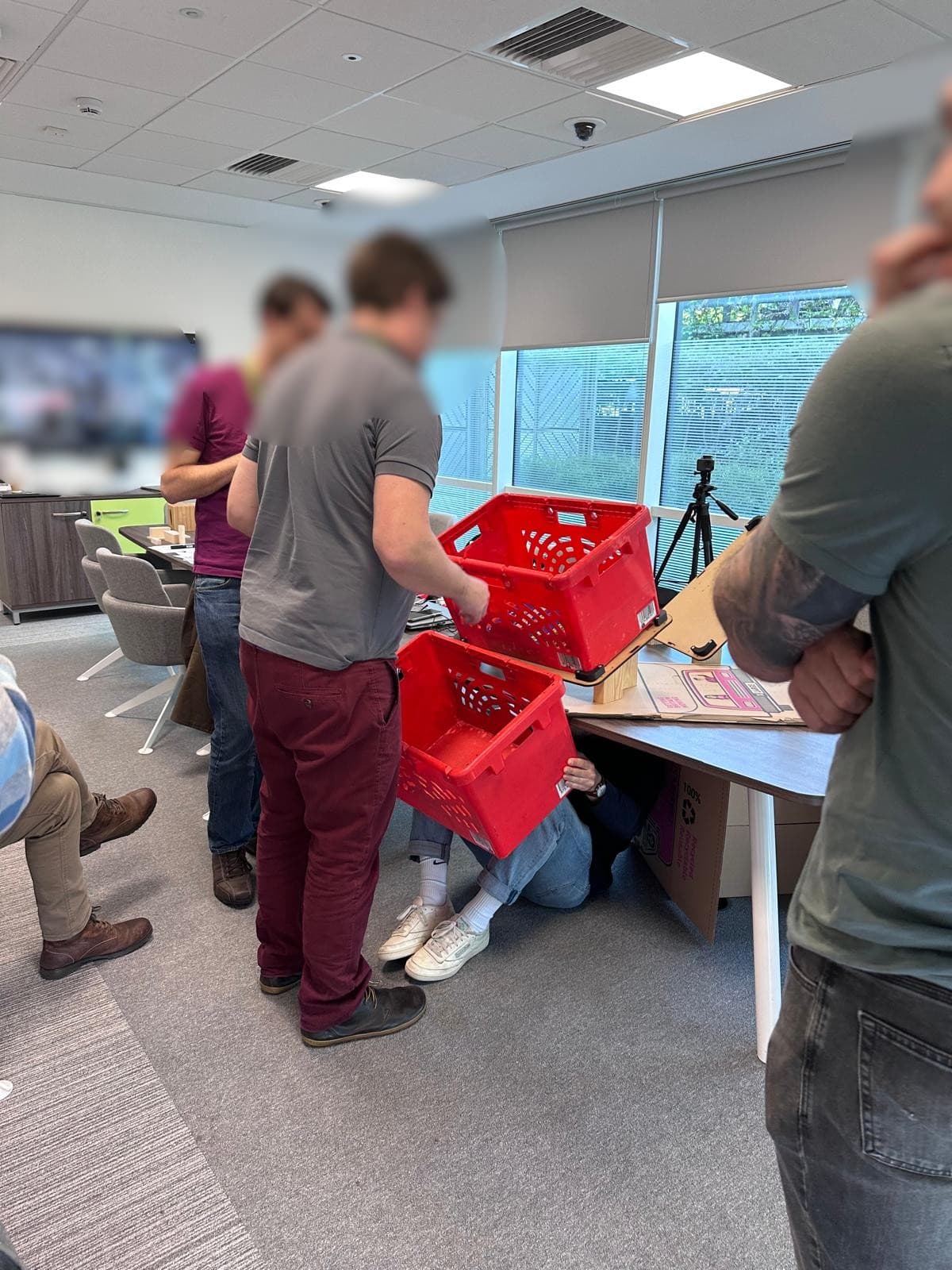
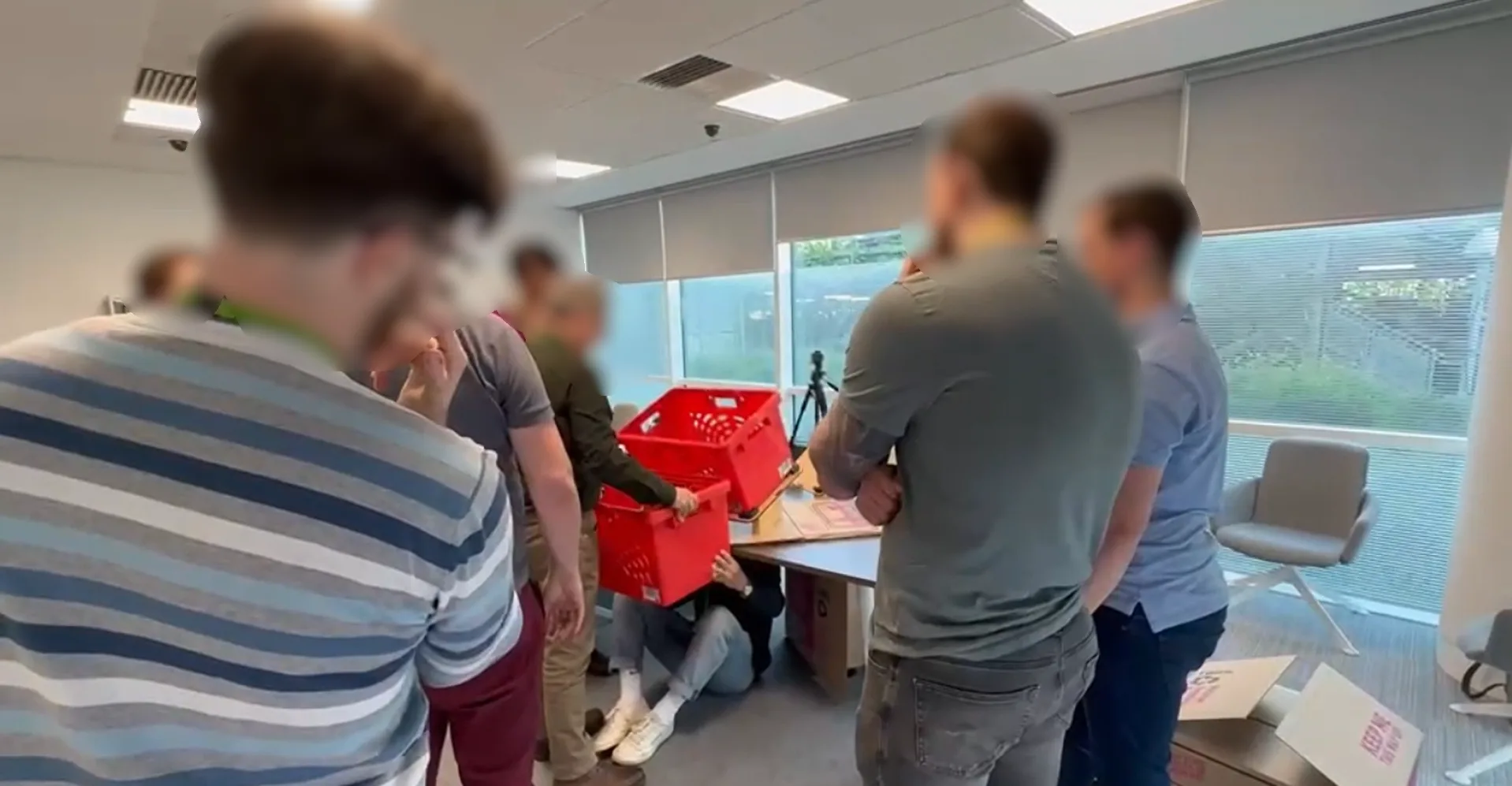
Using real equipment from the warehouse floor — totes, tables, products — teams built a full-size version of the selected concept. Then everyone tried it, physically walking through the workflows: reaching into totes, moving products, simulating a real shift.
What the Prototype Revealed
Tote angle and height: a daily physical strain that only became visible when someone actually stood there.
When people physically reached into totes at different angles and heights, the geometry mattered enormously. Wrong angle or too high, and reaching the bottom was difficult, sometimes impossible for shorter workers. Not a minor usability issue: a daily physical strain for every worker, every shift.
The team explored height and angle combinations on the life-size prototype, adjusting and testing repeatedly, while the ergonomics specialist assessed reach, posture, and physical load against professional standards in real time.
By the end of the day, the engineering team had
- A clear picture of the core physical actions the station needed to support per workflow
- Awareness of ergonomic constraints — tote angle, height, reach — they hadn't considered closely before
- An understanding of how conveyor design would need to change across workflows
- Direction for the hardware design grounded in physical testing rather than assumption
The workshop gave them something a design brief could not: the experience of actually trying to use the thing they were designing.
The Outcome
The product and engineering teams took the workshop's findings straight into the next-generation station design. Development started shortly after the workshop and was still ongoing when I left the company.